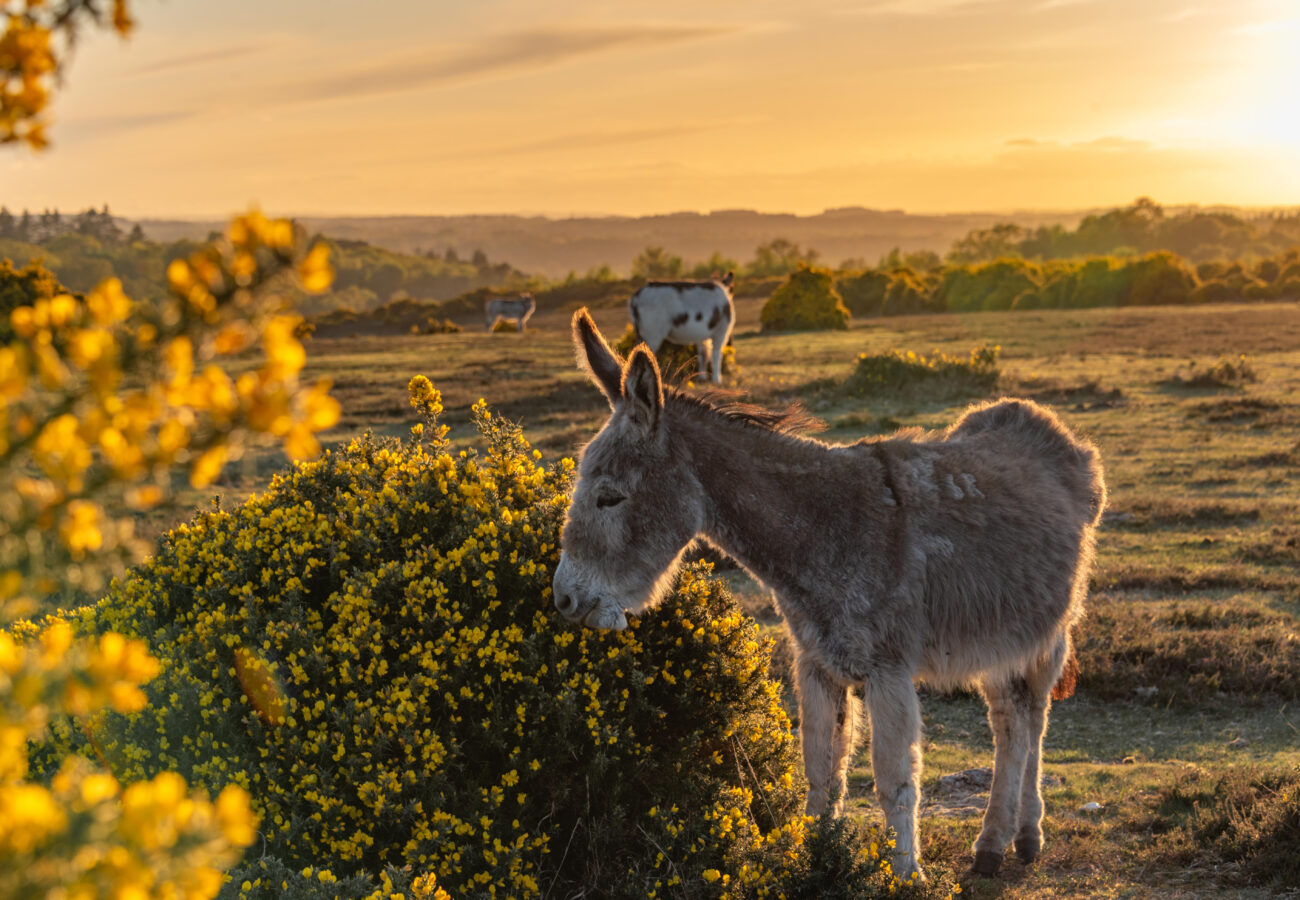
New Forest Pony

New Forest National Park

Designated on 1 March 2005

The New Forest is both younger and older than the other National Parks. Protected by royal decree since the 11th century, its heritage as common land made it more of a working landscape than a wilderness. When it was finally designated as a National Park in 2005, nothing was lost and much was gained, with its forests and culture secured for generations to come. 

In this guide, we offer you a few ideas on where to go and what to see, from beacons of maritime history and ancestral homes to rare fungi, woodlands where ponies wander and pastures full of majestic herds of deer.

Walking

Fritham to Nomansland (NORTH)

Start/endpoints: The Royal Oak (Fritham) or the Lamb Inn (Nomansland)

Fritham to Nomansland (NORTH)

Start/endpoints: The Royal Oak (Fritham) or the Lamb Inn (Nomansland)

Distance: 6mi, elevation: N/a, difficulty rating: 2/5

Start/endpoints: The Royal Oak (Fritham) or the Lamb Inn (Nomansland)

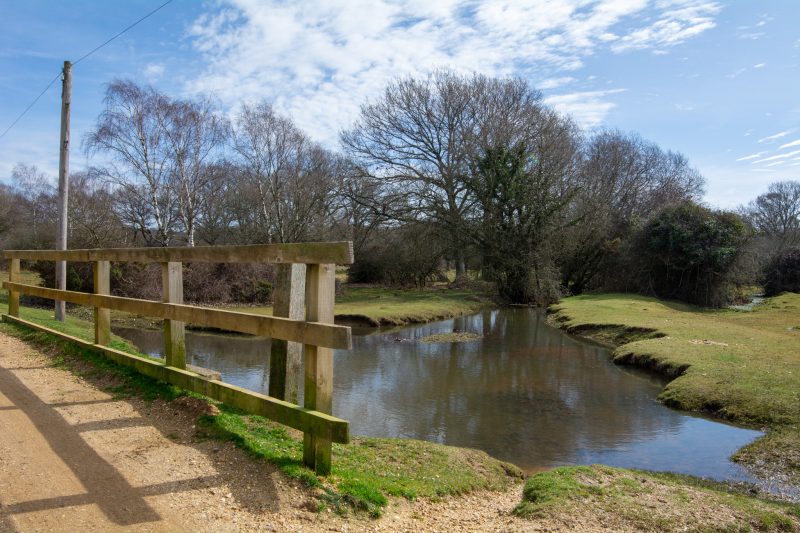
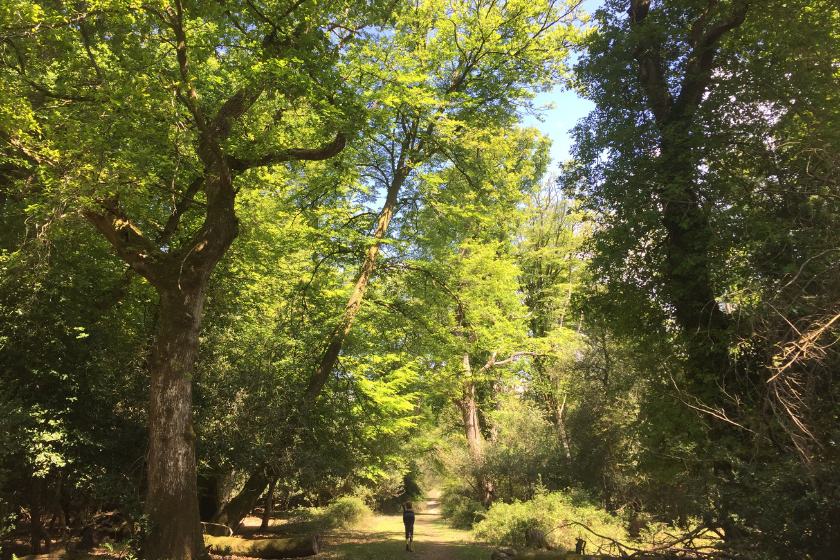
There are pubs at both ends of this out-and-back route (three miles each way), so you don’t need to worry about working out where to start, finish or linger too long over lunch. It was initially established as the road to and from a Victorian gunpowder factory, for which Eyeworth Pond, which you’ll see as you go, was dug to supply water. It’s a gentle ramble through woods and heath, with the only potential difficulty being some stretches that can get a little boggy, although there’s always an alternate path.

Brokenhurst in the New Forest

Lyndhurst to Brockenhurst loop (CENTRAL)

Start/endpoints: Lyndhurst or Brockenhurst!

Brokenhurst in the New Forest

Lyndhurst to Brockenhurst loop (CENTRAL)

Start/endpoints: Lyndhurst or Brockenhurst!

Distance: 10mi, elevation: 940ft, difficulty rating: 3 / 5

Start/endpoints: Lyndhurst or Brockenhurst!

There’s a good chance you’ll end up in one of the Park’s two main villages, Lyndhurst or Brockenhurst, while you’re in the New Forest, so you can pick up this rewarding loop to make a day of your visit. There’s some moderate climbing but this is hardly a mountain scramble, as you wander almost entirely on flat paths through the forest. Along the way you’ll be tempted by stops at ‘Brockenhurst Beach’ and Bolderford Bridge, both popular swimming spots where the river is broad and shallow, as well getting a good view of The King’s House, the historic seat of power in the New Forest, from which the Court of Verderers administer the rights of the commoners permitted to use the land for grazing. Another curiosity is the grave of Mrs Reginald Hargreaves at the Church of St Michael. Born Alice Lidell, she was the inspiration for the most famous creation of family friend Charles Dodgson, aka Lewis Carroll.

New Forest

Whitefield Moor (CENTRAL)

Start/endpoints: Whitefield Moor car park

New Forest

Whitefield Moor (CENTRAL)

Start/endpoints: Whitefield Moor car park

Distance: 1.5mi, Elevation: 105ft, Difficulty rating 1/ 5

Start/endpoints: Whitefield Moor car park

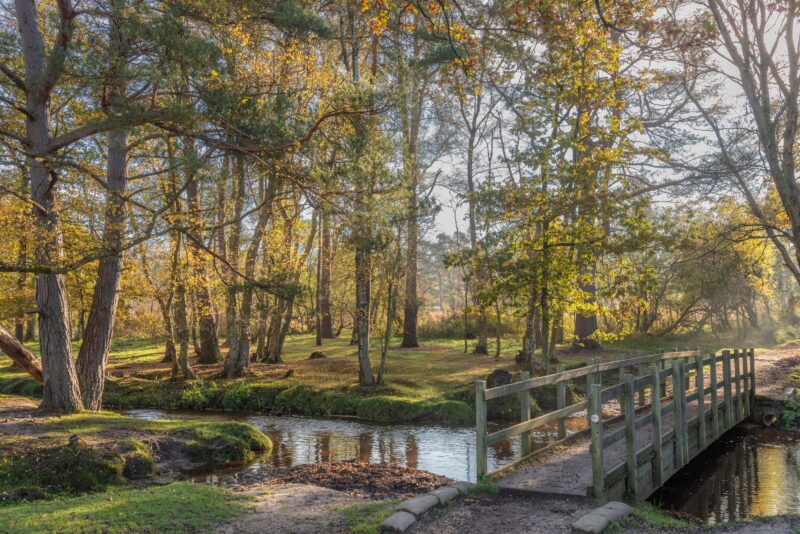
This easy and accessible loop is less a walk and more a pleasant way to get out in the fresh air for a bit. The path takes you up one side of Ober Water and back down the other, crossing on plank bridges at either end. The low and level wetland area can get a bit muddy if the weather’s been bad but it also provides an important wildlife habitat. Birders should definitely bring the binoculars, while kids can get down on the bridge crossings and watch for frogs, fish and all manner of bugs and beasties. For more outdoor time, you can  pair it with a visit to Blackwater Arboretum to the north, before heading back into Brockenhurst for lunch.

Ibsley Common and Bratley Plain (WEST)

Start/endpoints: Blashford Lakes Nature Reserve

Ibsley Common and Bratley Plain (WEST)

Start/endpoints: Blashford Lakes Nature Reserve

Distance: 9mi, Elevation: 1,300ft , Difficulty rating 3/ 5

Start/endpoints: Blashford Lakes Nature Reserve 

This is a walk to think carefully about the timing of. At any time of year, it’s a pleasantly exerting hike, with some stunning views across the hills of the park to take in while you catch your breath. If you go in late summer though, you’ll be walking, at times, through striking fields of waving pink and purple heathers, with ponies wandering in the rosy sea of flowers. There are various routes that can extend or shorten the loop, but on many of them you’ll pass a curious octagonal wall, the remains of a “Huff Duff” (High Frequency Direction Finding) Station, part of a network which broadcast homing signals for aircraft returning to England in WWII.

Beaulieu to Buckler’s Hard (SOUTH)

Start/endpoints: Beaulieu

Beaulieu to Buckler’s Hard (SOUTH)

Start/endpoints: Beaulieu

Distance: 4mi, Elevation: N/a, Difficulty rating 1.5/ 5

Start/endpoints: Beaulieu

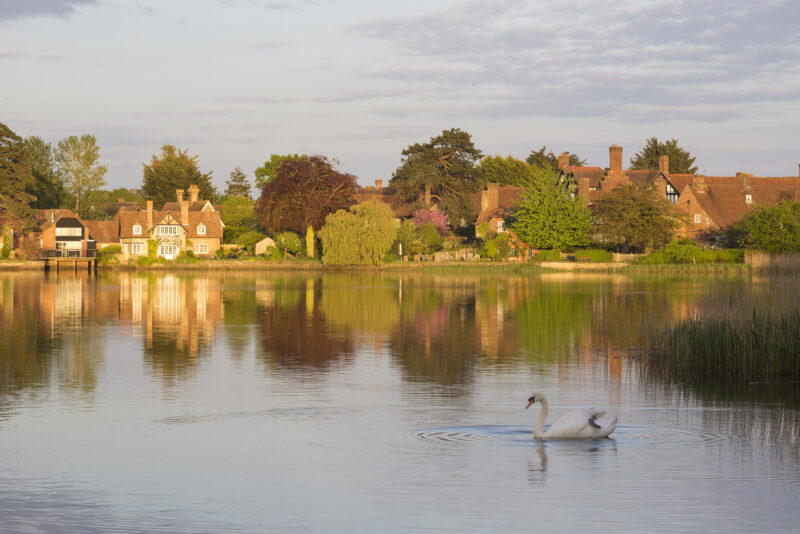
Pretty much all of Beaulieu is Montagu country and has been since the 1500s. Their estate now houses the famous Motor Museum and Palace House, the family home, is so grand a dwelling that you have to squint to imagine its origins as the estate’s gatehouse. You’ll see the Montagu crest, three red diamonds, on plenty of other buildings too. While you might be tempted not to leave the village at all,  give liberty unto thine eyes and examine other beauties, on a delightful riverside walk taking you along the banks of the tidal stretch of the Beaulieu River. It’s great for birders and no less historic than the village, as you end up in the famous shipbuilding village of Buckler’s Hard, which was briefly renamed Montagu Town in the 1700s, but reverted to its original name once the ambitious 2nd Duke Of Montagu’s plan to use it a trading port collapsed.

Lepe Loop (SOUTH)

Start/endpoints: Lepe Country Park

Lepe Loop (SOUTH)

Start/endpoints: Lepe Country Park

Distance: 5mi, Elevation: 200ft, Difficulty rating: 2/ 5

Start/endpoints: Lepe Country Park

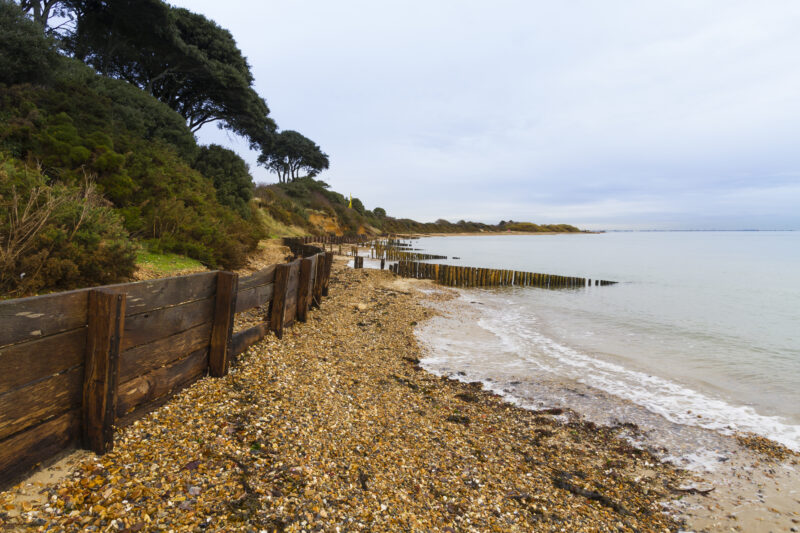
Many people aren’t even aware that The New Forest runs right down to the sea but its short coastal stretch is well worth a look. From Lepe Country Park, a simple loop leads west along the base of the foot of the cliffs, with a choice to be made between the low tide route and the high tide route when the path peters out into the sand. You’ll see coastal defences from WWII, pass through a local nature reserve and be tempted into a stop by a café with fine views of the Solent.

Other things to do

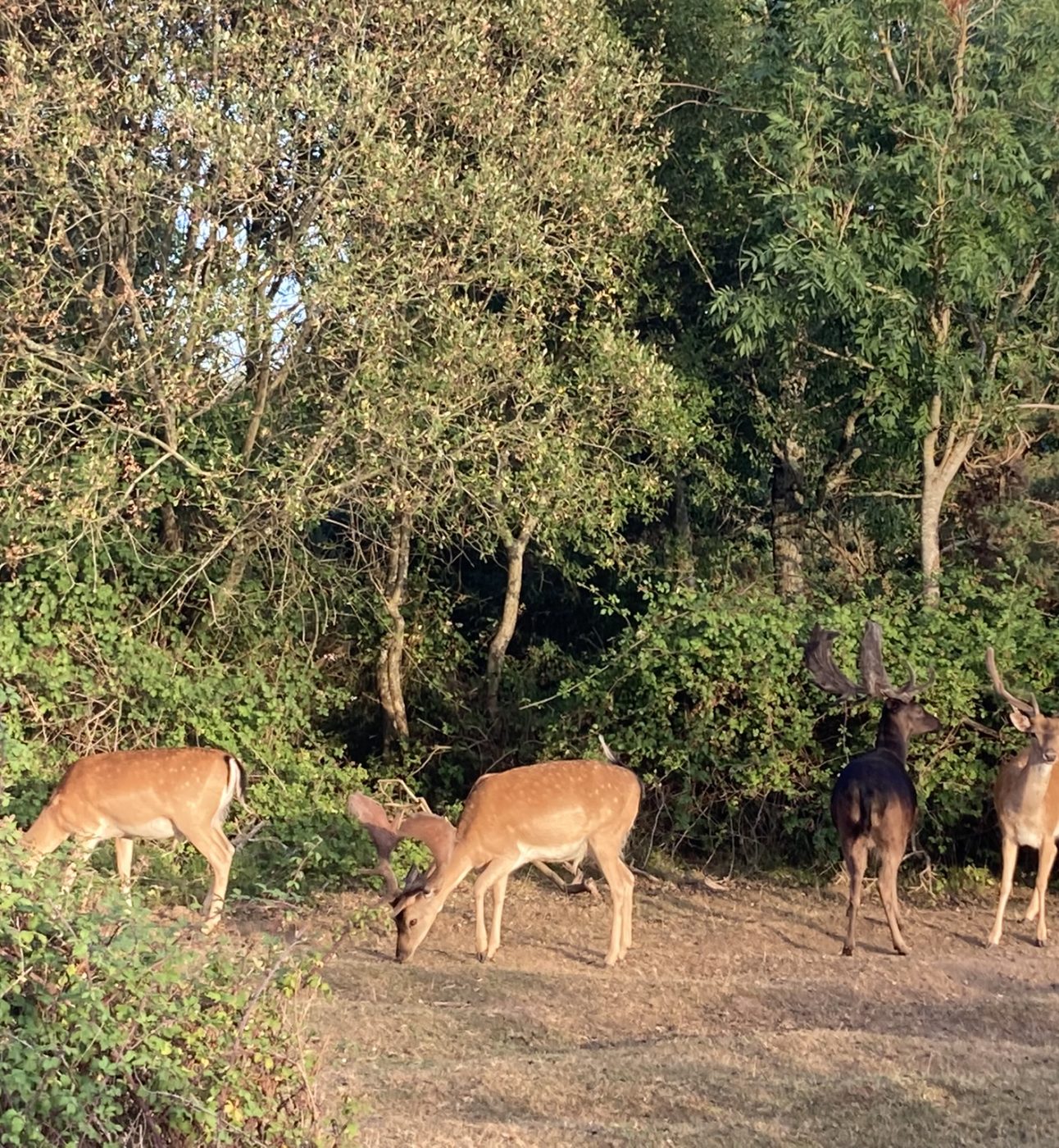
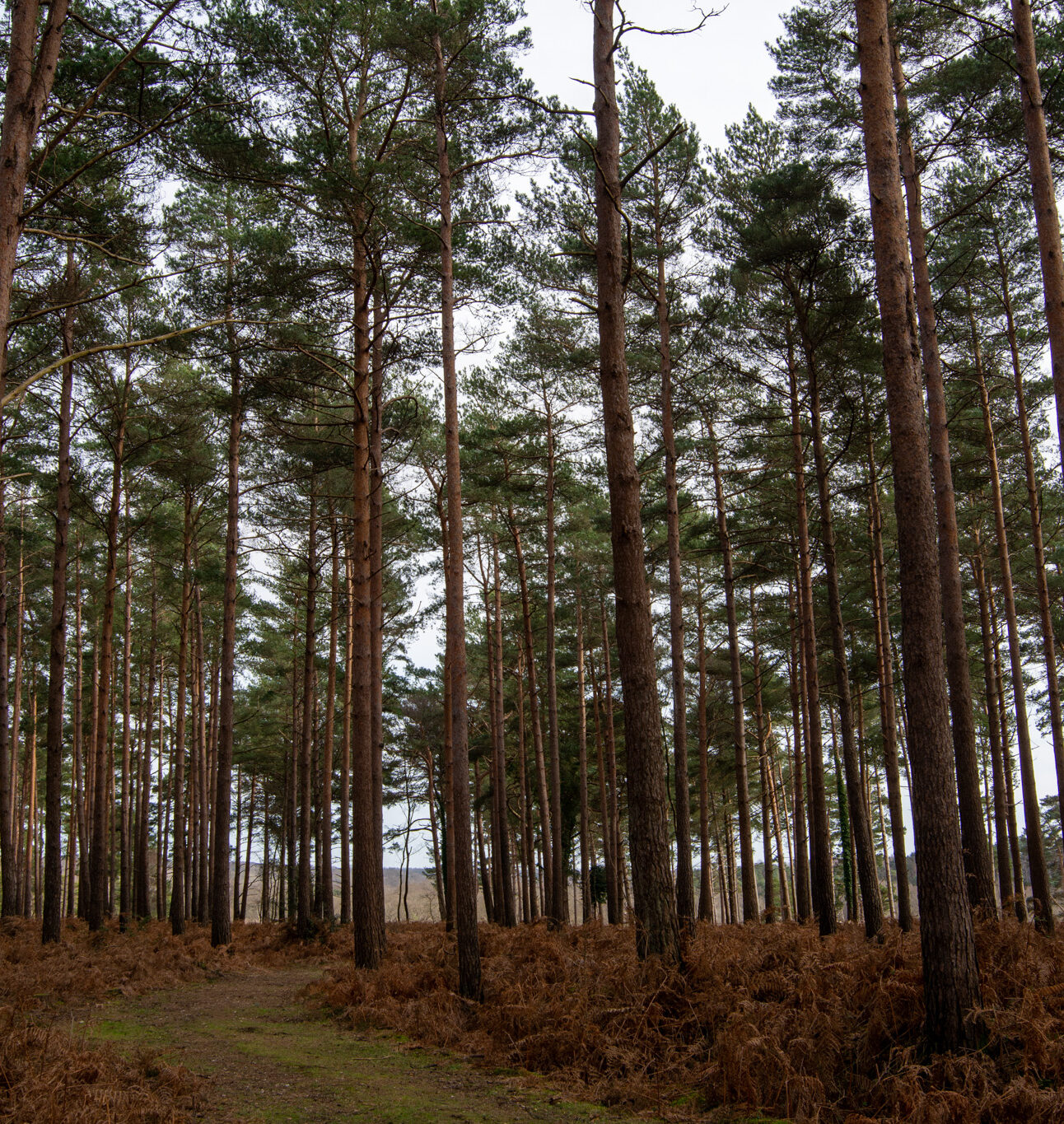
While we were tempted to list this in the Walking section, the distance from the car park to Bolderwood’s purpose-built deer viewing platform is unlikely to test your endurance. From it, you’ve a wonderful view over the surrounding land and the best chance of catching sight of the herd that roams the fields. There are one- and two-mile trails marked in the woods if you do want a little more exertion, with some of The New Forest’s oldest trees and some lovely picnic spots to discover.
The village’s name is thought to derive from the prominence of a family by the name of Buckle, combined with the standard suffix “hard”, indicating a firm landing, which is fitting given its place in naval history. It’s here that Nelson’s Navy was built, including his troublesome but beloved Agamemnon. You’re welcome to stroll the village but there’s a charge for entering the museum and for the boat cruises that follow the wake of history down the river.
The village of Beaulieu has such a longstanding history of hauntings that Arthur Conan Doyle once held a seance in Palace House, where a Lady in Blue has been seen and heard on several occasions. At the Abbey on the estate, spectral monks have been said to appear, walking calmly through the ruins. Even if you don’t spot anything ethereal, the more earthly history is impressive, the abbey having been destroyed on the orders of Henry VIII and the house showcasing centuries of English life.
While it might seem odd to suggest visiting a homage to machinery in the middle of a national park, it’s hard to deny that Beaulieu’s National Motor Museum has a touch of magic about it. You can sit in the original Chitty Chitty Bang Bang, dress up in Victorian driving goggles and take a tour through all things wheeled and wonderful.
If you’ve a keen eye for fungi, make sure to look out for the beautiful Candelabra Coral as you roam the woods. Recently thought to be extinct in the UK, the white, tubular fungus has had a modest revival in several parts of England and its appearance in The New Forest is a pleasant surprise. 
The New Forest’s wide, flat trails lend themselves perfectly to easy cycling, so you don’t have to be a Tour de France winner to tour the area on two wheels. There’s bike hire (even tandems!) from Brockenhurst station which has regular trains to London Waterloo and Weymouth, so you can rattle in and roll out without ever getting in the car. At Burley and Ashurts, both great trail hubs, the organisation PEDALL offers inclusive cycling opportunities to enable anyone who needs support to enjoy the woodlands.
Lymington and Keyhaven Marshes Nature Reserve is a huge, sprawling wetland that’s an internationally important habitat. Migrant species gather here, swelling local numbers enormously at certain times. Visit in spring to see arriving migrants such as wheatear, swallow, terns, or in winter to catch the large flocks of brent geese, wigeon, pintail, waders that gather. The long seawall running through the site makes a perfect viewing point.
This is the home of small-batch distillers 820 Spirits and the fact that they pronounce it eight-two-oh, in a nod to the chemical structure of ethane, tells you a lot about their approach. Science-led distilling methods have helped them produce a range of gins, rums and soon whisky that capture the flavours of The New Forest. Book their gin or rum school for a couple of hours of making and sampling – very informative as long as you can remember any of it afterwards.
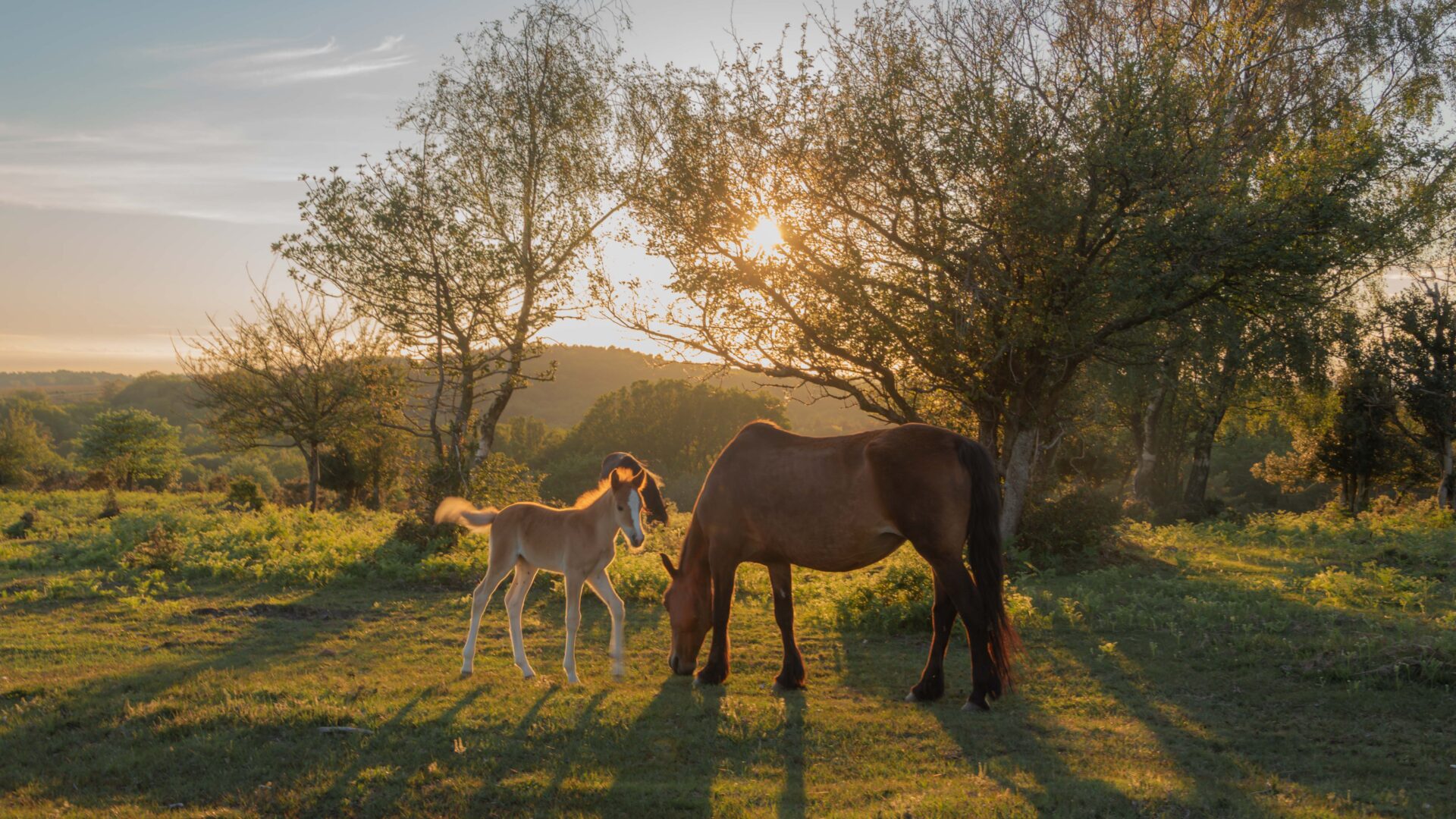
New Forest Pony

Did you know?
The New Forest is, in a way, the oldest national park, having been known by linguistic variations on its name since it was recorded as Nova Foresta in the Domesday Book in 1086.

© Lauren Simmonds
New Forest

Did you know?
An author whose genius was evident in the long downstrokes of his handwriting, the wax in his moustache and the way he wore his pocket watch, is buried in Minstead Church near Lyndhurst. We’ll let you deduce who.

© Andrei Stancescu

A quick history lesson

Whilst it was only designated as a National Park in 2005, the history of the area stretches back centuries, to when William the Conqueror claimed it as a deer hunting ground, despite the fact that a lot of people lived and farmed there already. Remarkably, he recognised their right to continue doing so and instituted what remains to this day one of the most curious things about the New Forest – its use as common land. Locals known as Commoners, who have a right to graze animals in the New Forest, are still overseen by Verderers and Agisters, in a system which has evolved over the centuries while retaining much of its pleasantly archaic terminology. 

Pannage is still practiced, with the timely release of pigs to eat mast (fallen acorns) helping protect animals to whom the nuts are poisonous, but in the interests of modernity, estovers has been heavily amended and turbary and marl have been abandoned (rights to firewood, clay and peat, in case you just had to know).

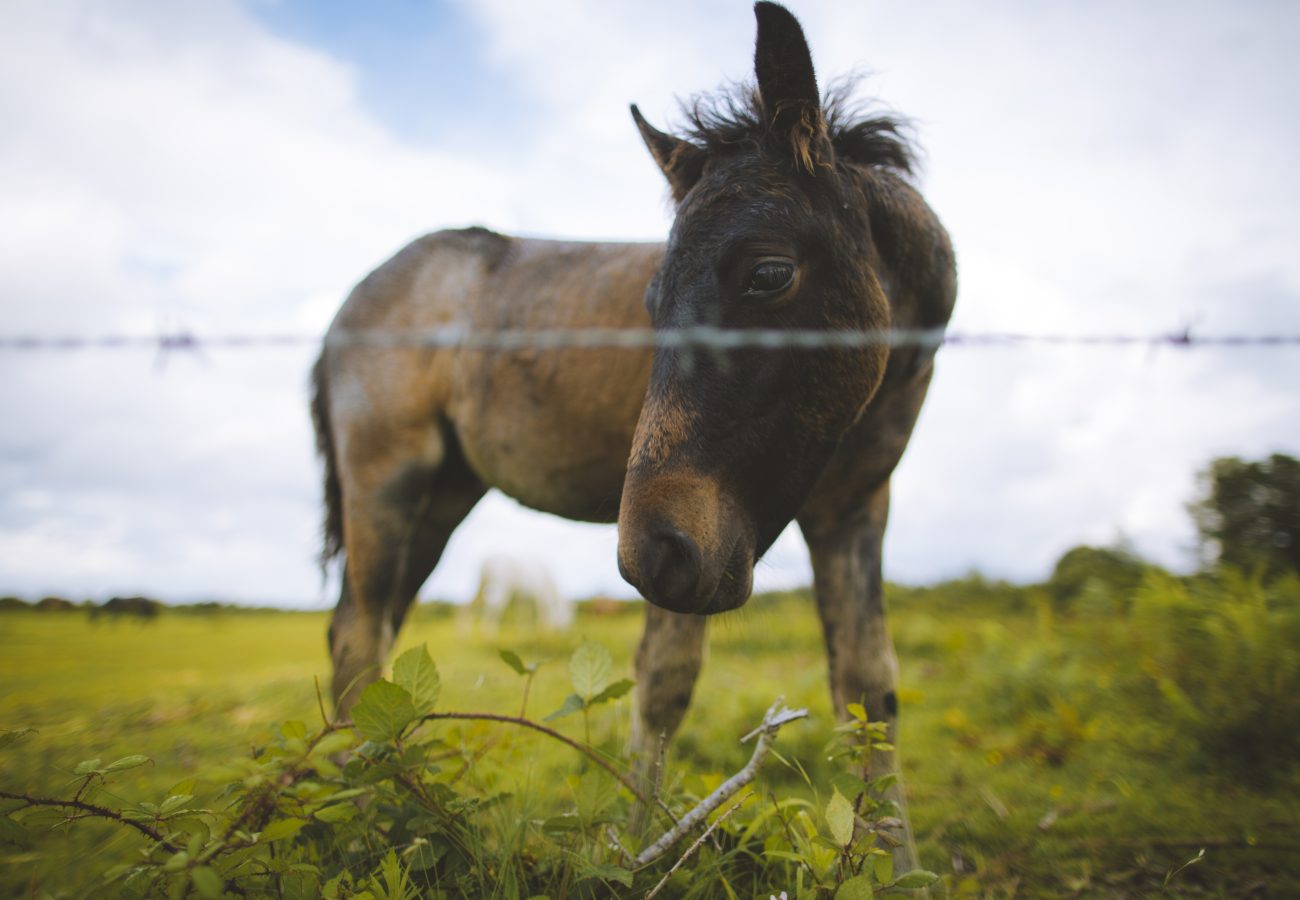
Commoning is a vital part of the ecosystem, with the ponies often called the “architects of The New Forest” for the way they keep the undergrowth under control. The way land is shared, enjoyed and maintained by farmers, landowners and travellers offers an old but somehow innovative model of how green spaces can be for everyone. Not a bad minor subplot to the legacy of a guy who just wanted to shoot deer.


Did you know?
If you’re experiencing lashings of deja vu as you wander around The New Forest, it might be because the iconic 70s TV adaption of The Famous Five was filmed in multiple locations around the park.

© Rose O'Neill

Planning your visit

Brockenhurst is the easiest entry point, with its station on a main line to London meaning you can be in Waterloo in less than a couple of hours. There are decent local bus services that connect the various parts of the park, as well as the Morebus, an open-top tourer that’s great sightseeing as well as transport.
The New Forest is a working landscape and while the animals you’ll see are owned and grazed by commoners, they are still wild. Keep your distance, don’t feed them and make sure dogs, if you have them, are under control or on lead. Alongside this and other fairly standard countryside considerations is the minor chance of stumbling across ordnance from the testing of bombs, for which the New Forest was used in both world wars. Keep your distance from those too, and let someone know you found one.

Back to all National Parks


Main image: © Dawn Brown