A QUICK HISTORY LESSON
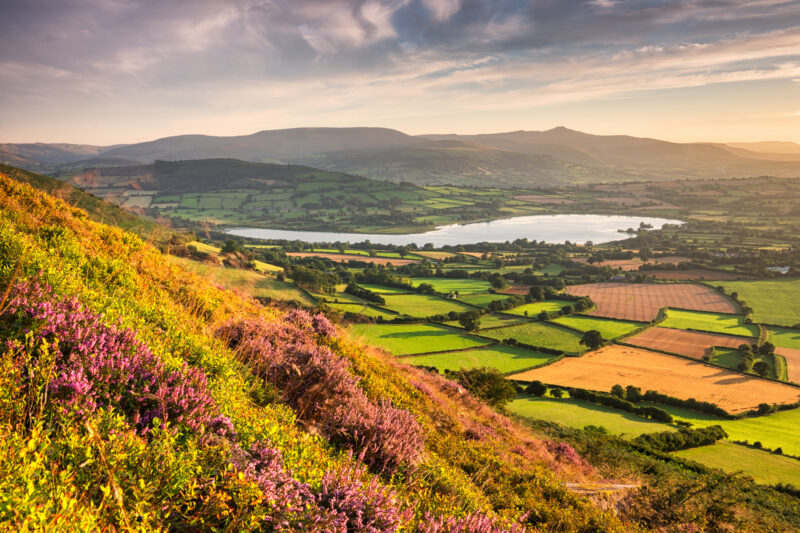
In April 2023, Brecon Beacons became Bannau Brycheiniog. You’ll often see it referred to as the park “changing” its name, but it’s perhaps more accurate to say that it had its name restored. The meaning is little affected – Bannau is an old Welsh word for peak or hill and while the Beacons mountain range only occupies a small amount of the park’s territory, it’s not a huge leap between the two. Brycheiniog simply means “of Brychan”, denoting how the whole region was once the kingdom of Brychan ap Anlach, a 5th-century king. Some sources call him Brocanus, some Broccan, Braccan, Brachan, Brecin or Breccan, so Brecon is just another in this long line of spellings.
In which case, you might wonder why bother changing the name of the park at all? Well, it’s because language and culture run deeper than politics. After centuries of war, Wales became formally united with England in 1536 but the roots of Welsh go back at least 1,000 years before that. Over time, the stealthy effect of English influence began to erode the use of Welsh, until by the 1990s it was almost considered a dead language. Fortunately, national pride ran deep, and the Welsh Language Act in 1993 was a determined line in the sand. Welsh began to flourish again, in schools, in popular culture, in all parts of the country. So, going from Brecon Beacons to Bannau Brycheiniog isn’t a name change or a technicality, it’s part of a quiet, dignified and important revolution.