Bannau Brycheiniog (Brecon Beacons) National Park

Designated on 17 April 1957

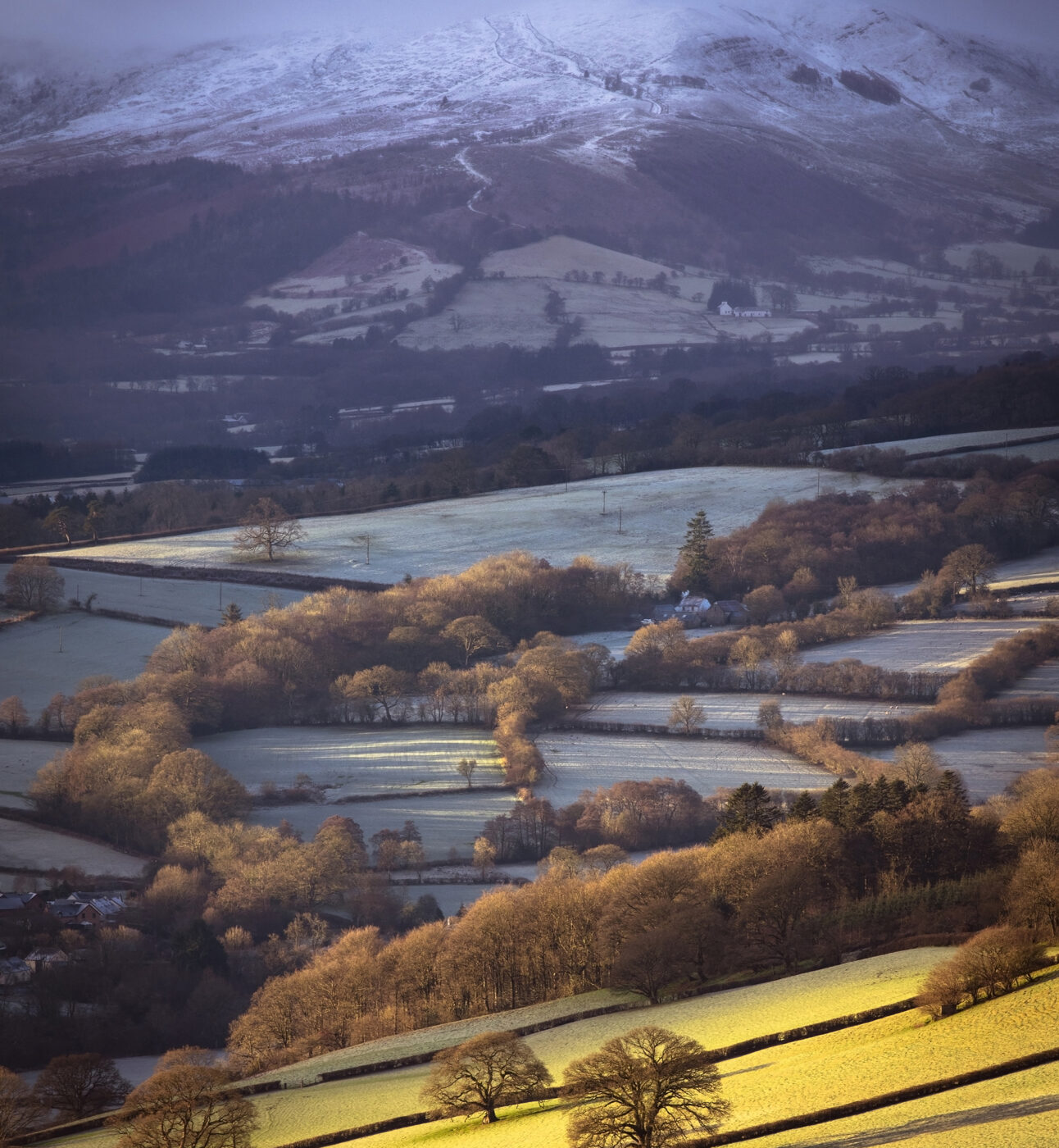
Wet and wild, a land striped and shaped by rivers which crash over falls, wind down gorges and hollow massive caverns beneath its soil, Bannau Brycheiniog is a place to get close to nature, and yet its human history also offers incredible depth.

In this guide, you’ll explore the park from its lofty peaks to the bottom of its cathedral caves and imposing mineshafts, with trips to fine distilleries and the home of Welsh rarebit to keep you going along the way. We hope it inspires you to wander far into the valleys and experience Bannau Brycheiniog in all its natural, cultural and historic glory.

Walking

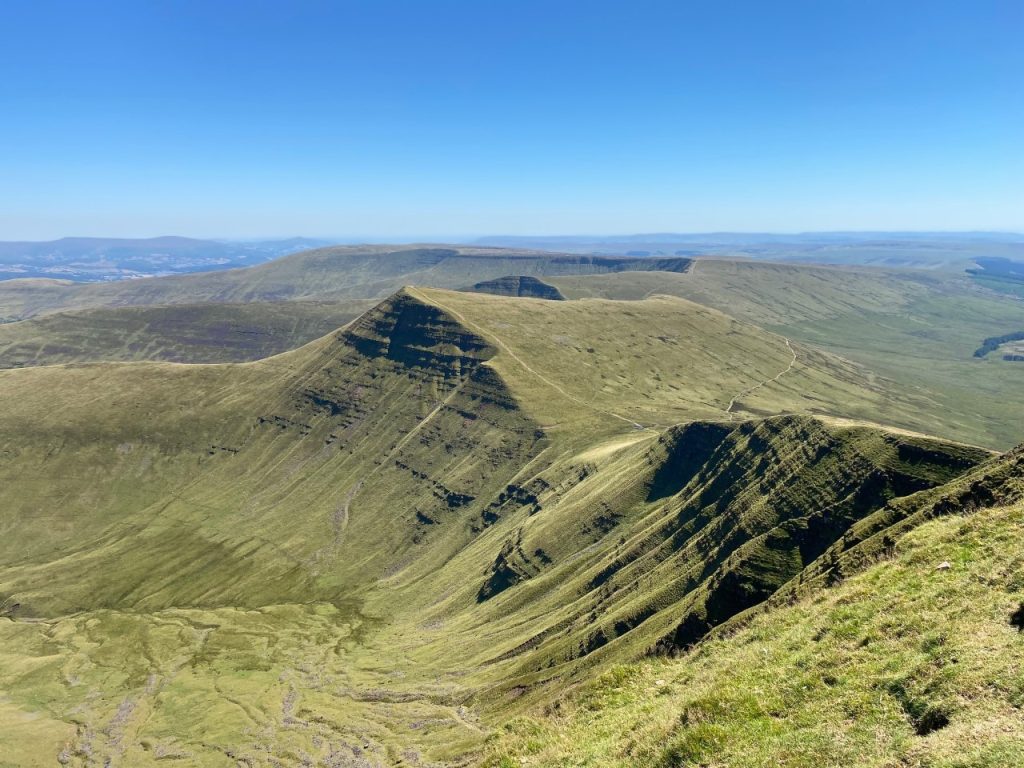
Pen y Fan quiet route (North/East)

Start/endpoints: Llanfrynach village

Pen y Fan quiet route (North/East)

Start/endpoints: Llanfrynach village

Distance: 6.5 mi, elevation: 2427ft, difficulty rating: 3/5

Start/endpoints: Llanfrynach village

Hiking up Pen y Fan from the main car park can put you in a long line of walkers and also give you trouble with parking. This alternate route, starting from the village of Llanfrynach, adds a little distance but means you could take a bus from Abergavenny to the trailhead if you made an early start. From the village, you follow the path along the river (Nant Menasgin) until it diverges at the bottom of the mountain  and takes you up to the summit of Fan y Big. From there, you join the Cambrian Way ridge walk to Cribyn and then Pen y Fan, retracing your steps or heading north along Cefn Cwm Llwch until you reach flat ground again and link up with the Three Rivers Ride path, which will take you east back to Llanfrynach. You add some significant distance to the direct route up to the park’s most famous peak, but get a quieter, wilder experience for it in return. 

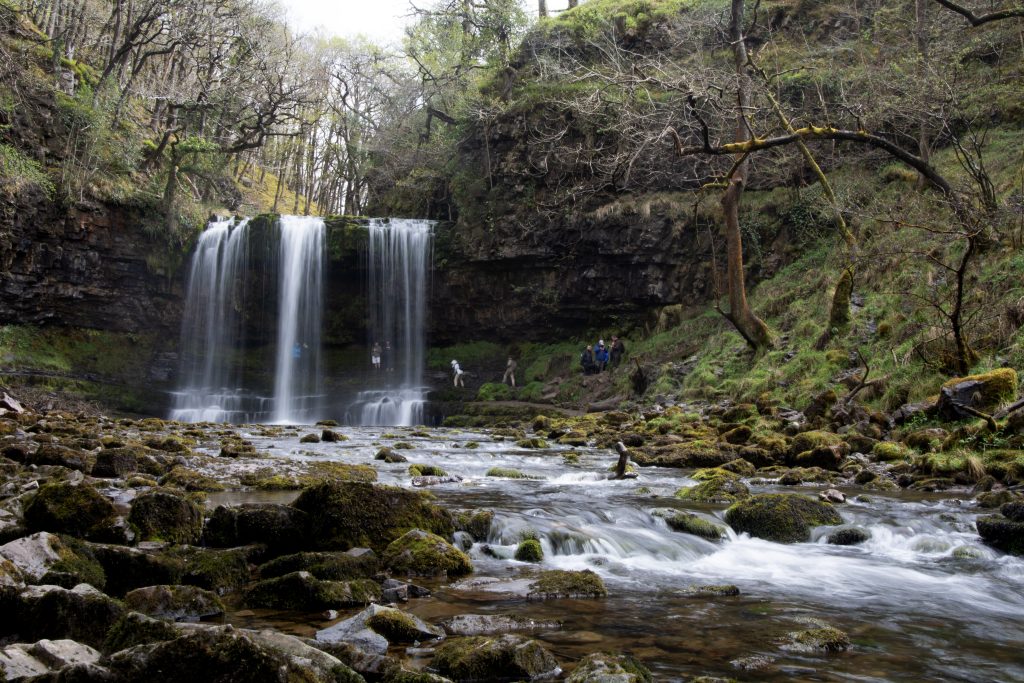
Sgwd yr Eira waterfall

Four waterfalls walk (South/Central)

Start/endpoints: Cwm Porth car park

Sgwd yr Eira waterfall

Four waterfalls walk (South/Central)

Start/endpoints: Cwm Porth car park

Distance: 4.5 mi, elevation: 885ft, difficulty rating: 2/5

Start/endpoints: Cwm Porth car park

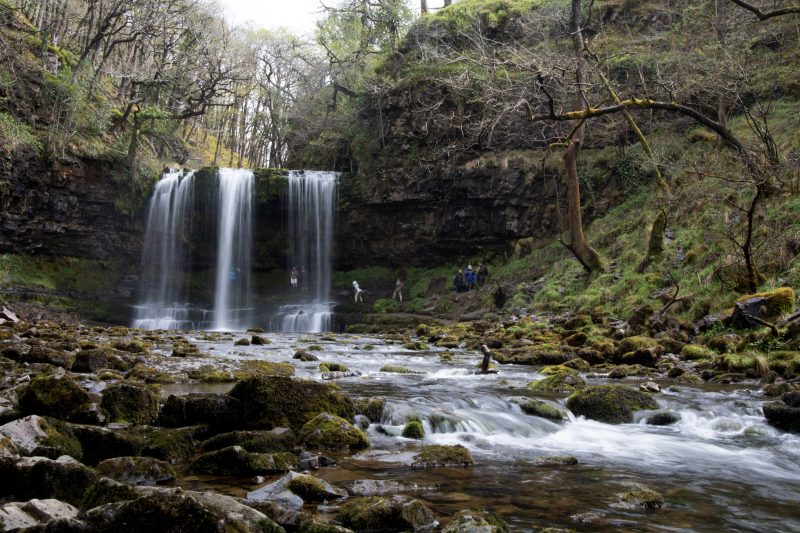
This undulating loop is one of Bannau Brycheiniog’s finest and therefore one of its most popular, which means two reasons to make an early start. Firstly, you’ll beat the crowds, have the trails clearer and be better able to enjoy the wonderful experience of hearing the waterfalls before you come up to them. Secondly, you’ll get a lovely slanting light on the water which makes the whole walk even more magical. The highlight of the route has to be Sgwd yr Eira, “Fall of the Snow” in English, where the cascade’s leap from a high shelf makes it possible to walk behind the rushing water. After the hike, head over to Penderyn for lunch in the pub, or to see what good use the local water is put to by the local distillery.

Alpaca walks (North/central)

Start/endpoints: Alpaca My Boots, Penpont

Alpaca walks (North/central)

Start/endpoints: Alpaca My Boots, Penpont

Distance: variable, elevation: N/a, difficulty rating: 1/5

Start/endpoints: Alpaca My Boots, Penpont

If you love hiking with an affable, woolly creature ambling alongside (insert joke about your other half here), then head north and take a wander at Alpaca My Boots. The 90-minute treks won’t test your endurance or your navigation skills (the alpacas know where they’re going) but it’s a unique opportunity to experience the landscape. Moving at a gentle plod, you’ll be able to take the time to look around, while your guides chat to you about the local area and the alpacas themselves. 

The Beacons Way - Llandeusant to Craig Y Nos (West)

Start/endpoints: Craig-y-Nos Country Park - Llandeusant

The Beacons Way - Llandeusant to Craig Y Nos (West)

Start/endpoints: Craig-y-Nos Country Park - Llandeusant

Distance: 10-11mi, elevation:1800-2500ft, difficulty rating: 3.5/5

Start/endpoints: Craig-y-Nos Country Park – Llandeusant

First established in 2005, the 99-mile Beacons Way is fast becoming one of the UK’s favourite multi-day hikes. The route was slightly revised in 2016, so make sure your maps are up to date, even if you’re only taking on one of the six sections into which it’s traditionally split. Sheep tracks can create a confusing mass of paths in some places. This section, on the western side of the park, is one of the less frequently travelled and offers you a quiet climb to Llyn y Fan Fawr, the highest natural lake in south Wales, with many stunning vistas along the way. There’s a good weather and bad weather option, with the latter not completely skirting the lake for safety reasons. Check the forecast for the day, plan carefully and enjoy a long, lovely stride.

Crickhowell to Table Mountain (East)

Start/endpoints: Crickhowell

Crickhowell to Table Mountain (East)

Start/endpoints: Crickhowell

Distance: 4.5mi, elevation: 1246ft, difficulty rating: 2.5/5

Start/endpoints: Crickhowell

If you’re in Crickhowell, stocking up on Welsh cakes ready for the 8000-mile hike to Cape Town, just look up. You’ll soon realise that you’re not heading for quite such an epic journey. The wide, flat top of the mountain is often visible, jutting up from the ridge above the town and while the route might not be globe-spanning, it does offer a moderate challenge. The walk is pretty much a single, steady ascent that quickly leaves town and trees behind and sends you stomping up the open hillside. It’s a wonderful walk to fit easily into a day, with easy access from Crickhowell meaning you can start as early as you like. Once you’re back down, conveniently around lunchtime perhaps, there are plenty of places to in Crickhowell itself, but you could always overshoot to The Horsehoe Inn, just acoss the river in Llangattock, where Chef Raymond Hinds serves up authentic Jamaican street food alongside Welsh classics. 

Brecon Prom (North/central)

Start/endpoints: Brecon

Brecon Prom (North/central)

Start/endpoints: Brecon

Distance: 0.5mi, elevation: n/a, difficulty rating 1/5

Start/endpoints: Brecon

Less of a hike and more of a pleasant way to break up your time in town, this short stroll along the Brecon canal path can be done with takeaway coffee in hand and no map required, even in the worst Welsh weather. You look out on the park from multiple points, there are benches for a quiet moment and you can watch the river as it flows past, sometimes a gently rippling stream, sometimes a frothing muddy torrent, depending on how much rain is running down out of the hills. It might not even leave you out of breath, but it’s a great way to start the day or pass a pleasant hour of the evening before dinner and a helpful reminder that not all time outdoors in a national park has to involve compasses, goretex and thigh burn.

OTHER THINGS TO DO

There are many parts of Bannau Brycheiniog, designated as International Dark Sky Reserves for the unpolluted quality of their night sky, so it’s always worth putting the coffee on, getting some blankets and staying up late outside for a bit. If you want to do things properly though, join an event at Libanus Mountain Centre, on which experienced astronomers will guide you round the night sky.
The Blaenavon World Heritage Site is spread over 33 square kilometres and comprises several different attractions which showcase the area’s industrial history, including the World Heritage Centre, Ironworks and The Big Pit. In the latter, you can descend 300ft into the old coal mines for a glimpse of what the miner’s life was like, the Ironworks has an impressive blast furnace and at the Heritage Centre you can experience virtual reality films that let you walk through 19th and early 20th century streets.
If you’ve been down the Big Pit and were impressed by what people can achieve, then head over to the National Showcaves Centre and see how nature does it on a much grander scale. The enormous caverns, through which the river Lynfell passes on a 6km underground journey, were discovered by the Morgan brothers in 1912, who explored by candlelight, presumably hungry and a little worried, given that they named some of the stunning rock formations they found “the rasher of bacon” and “the angel”. Geologists can marvel at the natural wonder of the spectacular caverns, then roll their eyes when the kids prefer the slightly more artificial exhibits of the dinosaur park.
In the grounds of St Cynog’s Church is a curious and disputed piece of natural history – The Defynnog Yew. The tree is said by some to be Britain’s oldest, with an age of around 5,000 years, while some estimate that it’s a mere sapling of 3,000. Either way, it’s a thought-provoking moment to look at the tree gnarled branches and think of all that might have passed since they first grew. Plus, a visit to the tree and the historic church will put you conveniently close to the International Welsh Rarebit Centre, so that’s lunch sorted.
This striking site is home to over 900 years of history, from the imposing tower built by the Picards as a statement of their transformation from Norman invaders to local lords, to the medieval court that flourished as a centre of poetry and culture during the Wars of the Roses. The great hall has been carefully restored and laid out as if the arrival of feasting, drinking, singing guests is imminent.
With plenty of hills and not many people to knock over as you tear down them, Bannau Brycheiniog is well set for mountain biking. There are plenty of trails to be discovered on guided tours not just within the park, but also in Bike Park Wales, just to the south of Merthyr Tydfil. While technically outside the park, you’ll still get the same great views and the same mud all over you.
The fiercely independent village with an array of buzzing independent shops, pubs and cafes, makes a great place to visit or even base yourself for your whole trip. There are plenty of walking routes, such as the Table Mountain climb, plus an annual walking festival in which guides and hikers gather and amble in sociable flocks.
The Hay Festival is one of the best-known literary festivals in Europe. Timing your visit for this event has its pros and cons, as you get to be part of the fabulous occasion but might struggle for space just walking down the street at some points, let alone parking or finding a place to stay. Out of season, Hay is still home to a remarkable number of specialist bookshops and as they’re places that lend themselves to quiet browsing, consider dropping by in winter, where you can dash through the cold from one cosy, musty book cave to another.

DID YOU KNOW?
In 2015, a type of dandelion discovered in the park was named Heiracium Attenboroughianum, in a loving but tongue-twisting tribute to the legendary naturalist .

Key information

Designation: 17 April 1957

Habitats: Mountains, moorland, heathland, lakes

Common wildlife: Red grouse, birds of prey such as the red kite, the harrier and the peregrine, pink meadowcap mushrooms

Star spots: Welsh mountain ponies, lesser horseshoe bats, otters

Notable towns and cultural sights: Abergavenny, the Monmouthshire and Brecon canal

Notable nature sights: Waterfalls, caves, Forest Fawr geopark

Popular activities for visitors: Hiking, mountain biking, stargazing, water sports

Highest peak: Pen Y Fan at 886 meters above sea level

Annual visitor numbers: 4 million (in 2019)

Threats: Overdevelopment, climate change

Back to all National Parks


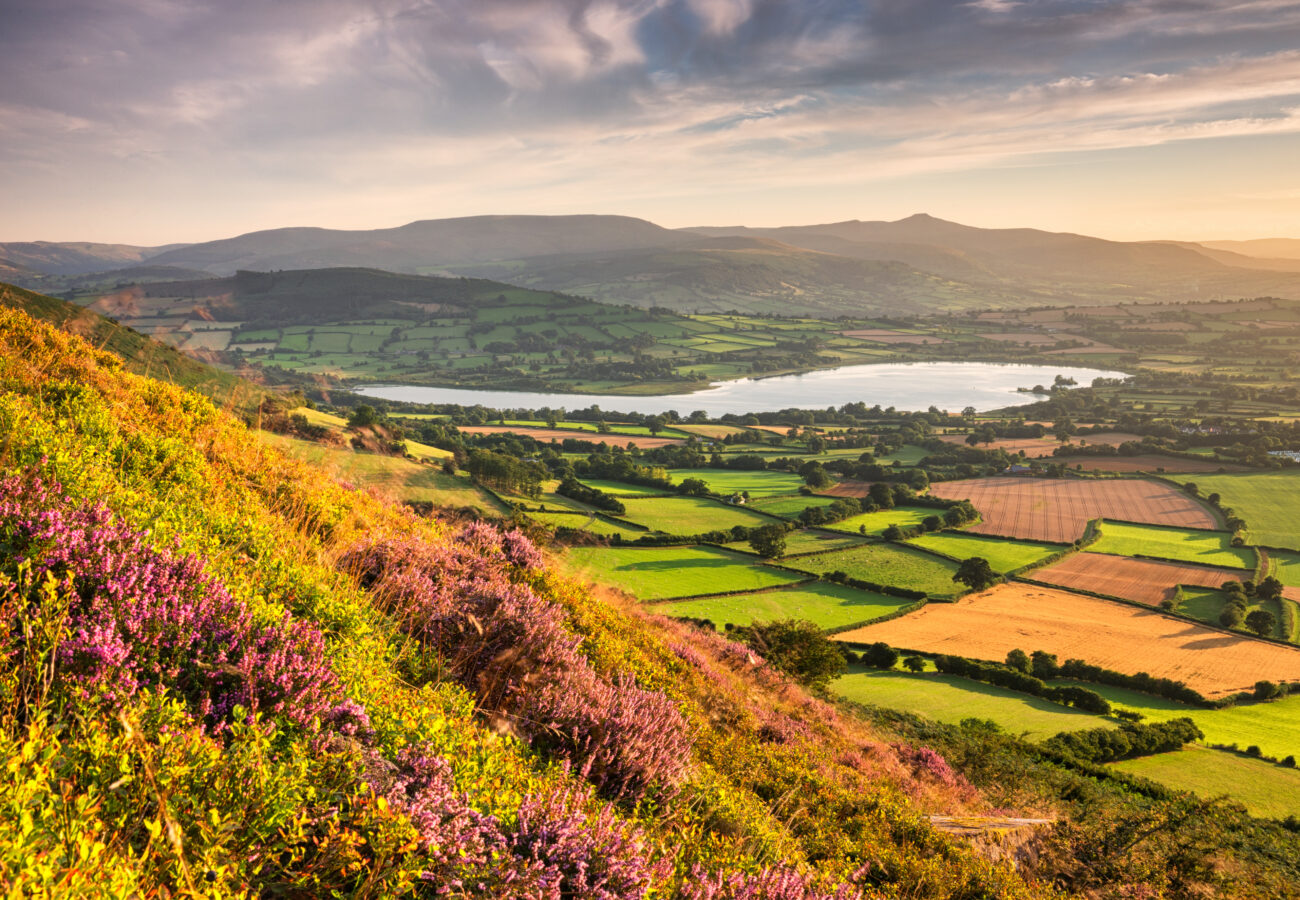
Main image: Llyn Y Fan Fach © Jonathan Lewis