

National Park: Rivers at Risk Report Launched
Our new research shows National Park rivers are being failed by government and water regulators and are now under threat.
Published: 15 April 2026
Sir David Attenborough once described chalk streams as some of the rarest and most precious types of freshwater system in the world. As Programme Manager for Chalk streams at The Rivers Trust, Alison Matthews explains how Campaign for National Parks and The Rivers Trust are coming together to protect and restore them.
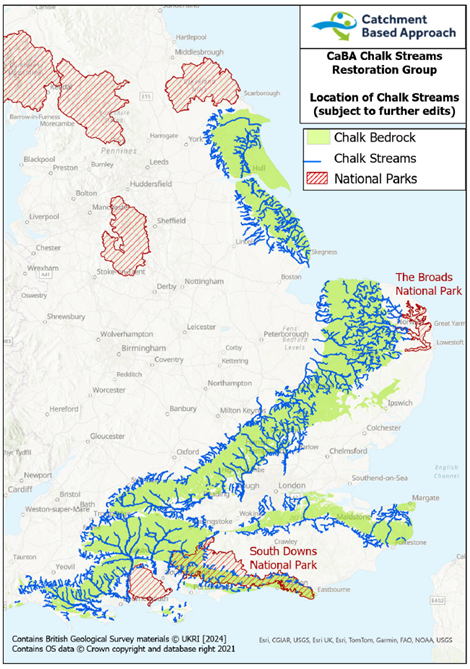
85% of all the chalk streams in the world are in England. While there is Chalk across much of Europe, it only surfaces and forms chalk streams in the south and east of England and in a corner of France and Denmark.
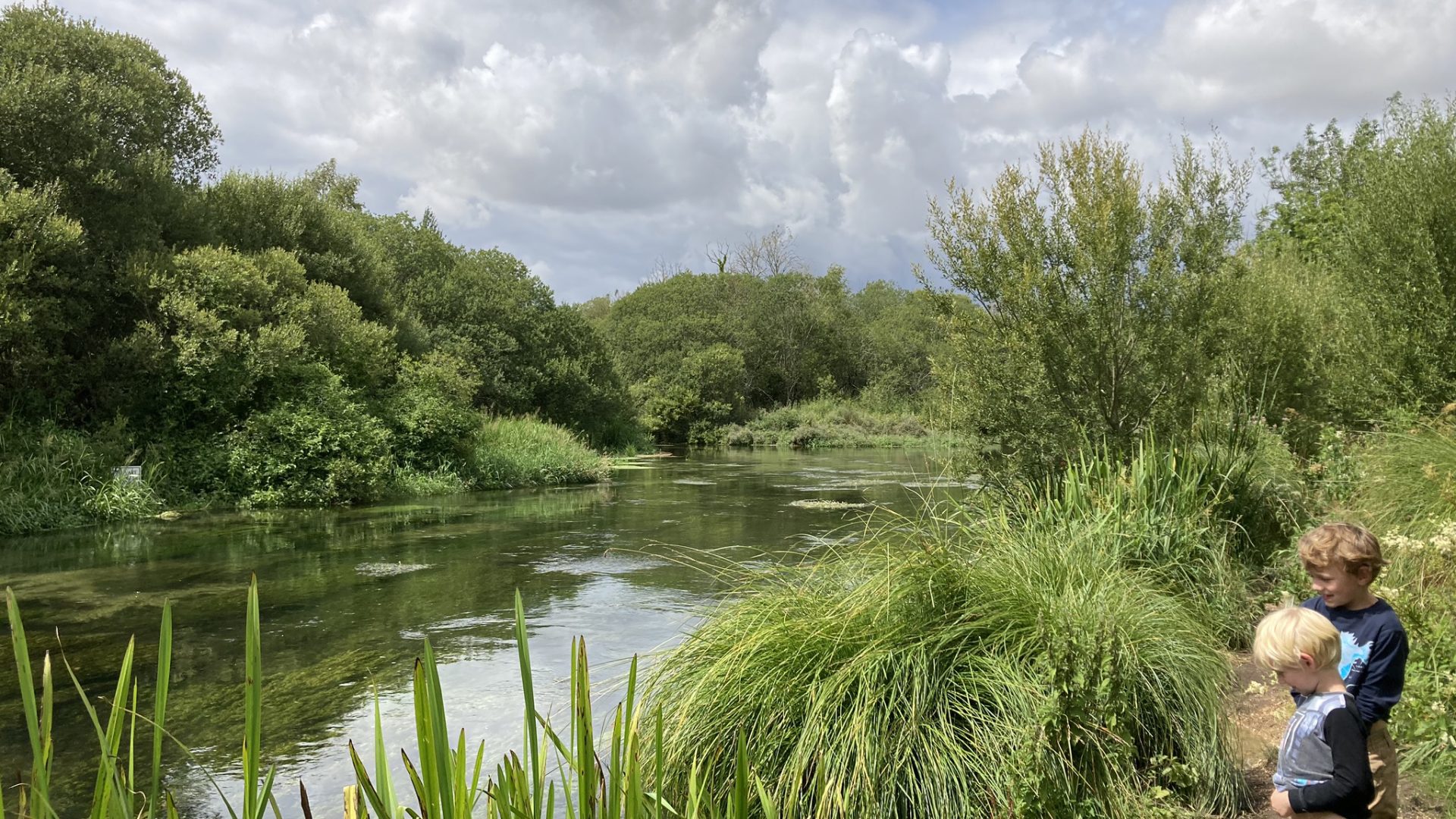
The National Park with the greatest number of chalk streams is perhaps not surprisingly the South Downs – famed for its iconic chalk landscape. The chalk streams there are varied, ranging from the River Itchen flowing through Winchester all the way to the most natural and undisturbed small chalk scarp streams. They all share the common characteristic of cool, clear, chalk groundwater upwelling through clean gravel beds, with a relatively small range of flows.
Another National Park where chalk streams are important is The Broads. The River Wensum is the principle chalk stream in the area and it feeds into the River Yare which along with the River Bure provides flow into The Broads system. The condition and quality of these chalk-fed streams is important because they can have a direct impact on the delicate ecosystem of The Broads.
Concerned about the state of rivers in our National Parks, Campaign for National Parks and The Rivers Trust recently released the Rivers at Risk report. It paints a stark picture showing that despite being located in some of our most protected and cherished landscapes the rivers in our National Parks are still suffering from a combination of pressures.
To keep our chalk streams healthy they need:
Our poor treatment of these gentle rivers has had a pronounced impact on them with 87% of chalk streams assessed as not meeting Good Ecological Status.
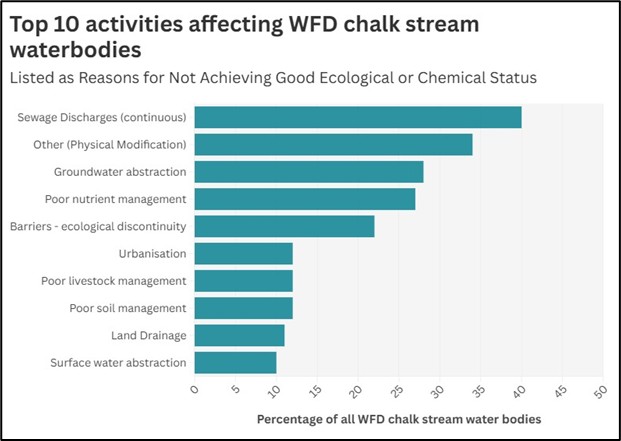
Analysis of data from the Environment Agency’s Catchment Data Explorer shows the activities having the biggest impact which relate to continuous sewage discharges (rather than the less frequent storm overflows), physical modifications, abstraction of water and issues with agricultural land use.
The Rivers at Risk report echoes those conclusions for the South Downs and The Broads National Parks where more than 90% of all rivers fail to meet Good Ecological Status and there is a significant impact from the water industry and agricultural and rural land management.
The EA also report that no river in England achieves Good Chemical Status and there is growing concern surrounding the emerging risks associated with microplastic and forever chemicals.
With the prospect of a changing climate, it is likely that our rivers will become warmer with lower flows and this will exacerbate the impact of existing pressures. There is also concern that growth in the demand for water and any associated increase in discharges of wastewater will lead to further impacts on our chalk streams.
Some of our classic chalk stream species are already in trouble. The southern chalk stream salmon are on the verge of extinction with a mere 133 salmon ascending the River Itchen in 2022. Without healthy chalk streams, it is possible that some of the species dependent on them may become extinct.
Despite a seemingly desperate situation there is hope. People have long cared about chalk streams. The Chalk Streams Restoration group was created in 2019 and published the Chalk streams strategy. A vital component of the strategy was the “One Big Wish” for proper recognition and protection of chalk streams as the rare and precious habitats that they are. Actions are underway to reduce impacts from abstraction, improve water quality and restore our rivers channels.
The Catchment Based Approach (CaBA) established a network of groups delivering actions to improve the water environment. At its heart are catchment partnerships who develop and implement catchment plans and work across sectors to deliver projects. In the South Downs, these catchment partnerships are working together to share knowledge and expertise to increase the impact that they can have.
An inspiring relatively recent development is the rise in local groups getting involved in protecting their local rivers. Citizen Science volunteers are collecting evidence to highlight where issues are, putting pressure on others to address them and challenging local communities to take action to protect their local rivers. The watercress and winterbournes initiative is a wonderful example of this type of approach.
There is a compelling and increasingly urgent case for the need to protect chalk streams and there is a growing community of people actively taking part in that work. National Parks and Rivers Trusts are at the heart of this process working alongside a huge array of partners to really make a difference. Our action alongside others is starting to make a difference.
For example, chalk streams are recognised as a high priority for action in the Storm Overflows Discharge Reduction Plan. The recently published Environmental Improvement Plan includes recommendations to protect chalk streams and after an active campaign led by The Wildlife Trusts, concessions were also achieved in the recent Planning and infrastructure Bill for the protection of chalk streams.
Gareth Ludkin from Campaign for National Parks wants to see improvements in rivers in all National Parks. He explains that a White Paper on water reform is expected later this year in England, following Sir Jon Cunliffe’s independent review. Campaign for National Parks have written to Ministers Emma Hardy and Mary Creagh to emphasise that these reforms are a crucial opportunity to tackle long-standing water quality issues in National Parks.
Campaign for National Parks will be working closely with Wildlife Countryside Link to press the importance of protected landscapes, and we are urging Ministers to use the White Paper to establish legally binding water quality standards, improve storm overflow management, and set high ecological targets for all freshwater within protected landscapes. This should also include a specific focus on protecting and restoring England’s chalk streams for their unique biodiversity and significant cultural heritage value.
You can find out more about the work of the CaBA Chalk streams group here – Chalk Stream Strategy – CaBA and sign up to receive their email updates.
Our new research shows National Park rivers are being failed by government and water regulators and are now under threat.
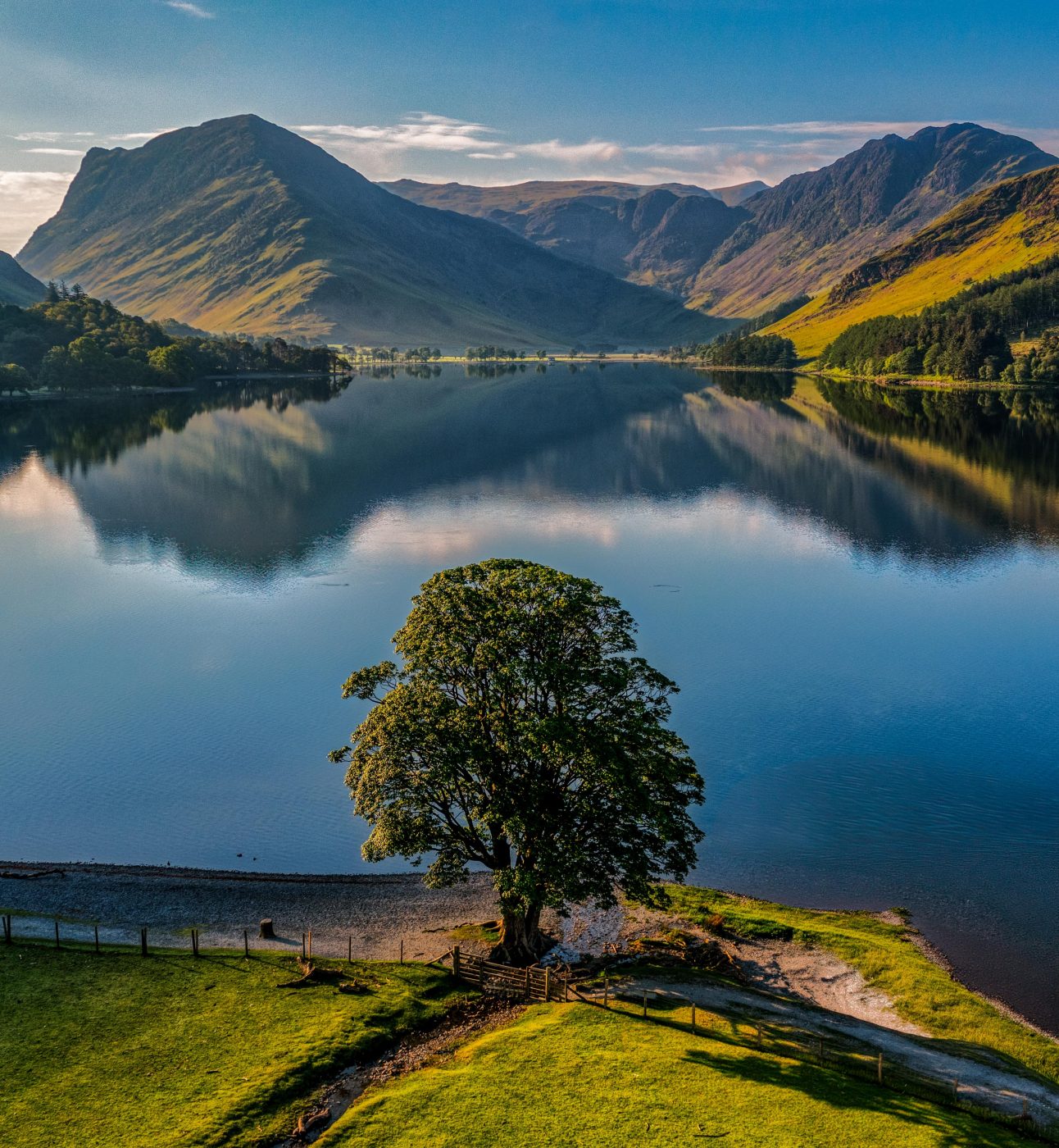
The Cunliffe Independent Water Commission has published recommendations for reforming the water regulatory system, but throughout this detailed report National Parks fail to be mentioned.
The UK Government has released official data on the state of nature in England’s Protected Landscapes, marking a big step forward in understanding how these special places are faring.